Don’t remember how I found out, but I may have stumbled on it trying to find a classroom in my freshman year many decades ago. And it was the only thing that kept me going.
It wasn’t in any of the orientation booklets or pamphlets about adjustment to college life meant to make you feel at home that were displayed in the counselor’s office. It wasn’t referred to in the interviews or introductory talks or added to the list that made this college so much better than others. And I never heard anyone talk about it.
But the college sleeping room was always open, at least every time I went. You entered through a normal wooden door in one of the buildings, just like any other classroom or professor’s office door.… ...continue reading
Major Tom Briggs liked the jungle of the Philippines. He was comfortable in his sweat-soaked uniform. The earthliness of the jungle’s petrichor and the sounds of its exotic creatures enchanted him. Briggs liked the Filipinos who tolerated his high school-level Spanish and taught him local dialects. He felt at home among them and in the jungle of the American-owned archipelago. So, when the Imperial Japanese Army invaded, the tall, blonde-haired lanky army officer and several of his men escaped into the torrid jungle rather than participate in the Bataan Death March.
They met with a small contingent of Filipino soldiers of like mind, and Major Briggs combined the forces into a guerrilla unit. Briggs had read every army manual in his local National Guard office. Believing the navy had nothing to do with him, Tom Briggs ignored the naval manual on the shelf with all the rest.… ...continue reading
Author’s Note: This poem is a distillation of many years’ worth of visits to the countryside of Poland as a child. As someone removed from the toil that comes from a livelihood dependent on the land, this poem splits between the back-breaking work required of children and the frivolity we allowed ourselves in brief moments.… ...continue reading
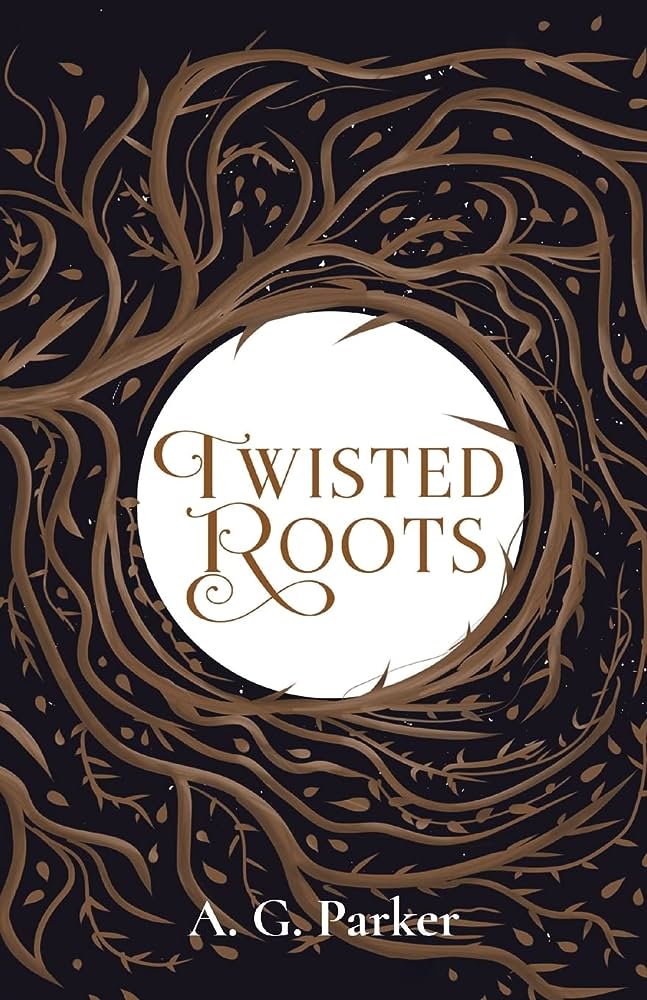
Twisted Roots by A.G. Parker (Reconnecting Rainbows)
A.G. Parker is a queer disabled writer/performer/editor/disability consultant based in London who’s been published in Mslexia, The F-Word, Financial Times, Human/Kind Press, Arachne Press, and Aeva Magazine. They are a Best of the Net-nominated poet, a workshop facilitator, and the co-founder of Queer Stage Revolution. Parker is also the host of A. G. Parker’s Cabinet of Curiosities podcast and an editor for Angeprangert! Spoken Word, as well as the co-host of Rebel Riot Poetry. In 2022, they were crowned Disabled and Queer Artist of the Year with their comedic-political spoken word drag act, George the Dragon.
This interview focuses on their latest book, 2023’s Twisted Root, published by Reconnecting Rainbows (which was founded in 2017 as an initiative to promote LGBTQIA+ mental well-being by encouraging participation in the arts).… ...continue reading
These are the very first words I say to my sister, as we walk through airport security, breathing in fresh air, after a five hour flight in a metal bird. Unlike the easygoing, small airport with overenthusiastic staff we’re used to back in Ankara, Istanbul Airport is massive, crowded and strictly professional. No random airport employee coming to help us here. They don’t even want to tell us which bus to take to get to our dormitory near some place called Hirka-i-Serif in Fatih. The one personnel we do manage to stop, glares at us, muttering, yabanci, as he walks off.
We’re not used to the cold shoulder in Turkey. Still, after much effort, and a quick stop at a cafe at the Airport to attend a work meeting, we manage to flag a cab.… ...continue reading
Wandering the aisles late at night, picking up this or that, turning it over in consideration only to reject it and drift farther along, Greg finally realized it wasn’t candy or salty snacks that he wanted, but meaning. The dollar store didn’t stock that.
When I was eight, I developed a theory: if I were a boy, my mother would like me. I found, on a crumpled summer camp form under a school bus seat, a question about whether “your daughter” knew about menstruation or had menstruated. I’d never heard the term (I was in fourth grade but in 1966) so I asked the bus driver what it meant. He turned red and told me to ask my mother. I persisted; he refused to answer. My mother gasped, “You asked the bus driver?” She offered an account of which I understood little except “never speak of this with your brother.” Babies and blood seemed to be involved. At the dinner table, I brought up both, plus the new word, which I pronounced “menyoustration.”… ...continue reading