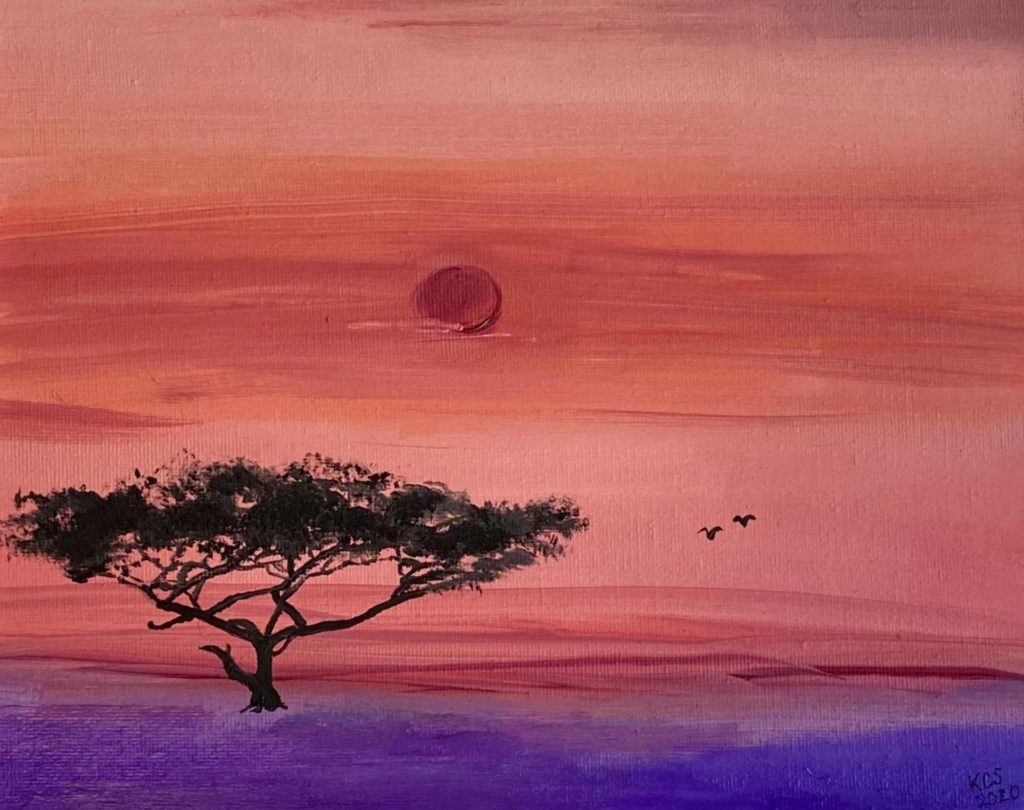
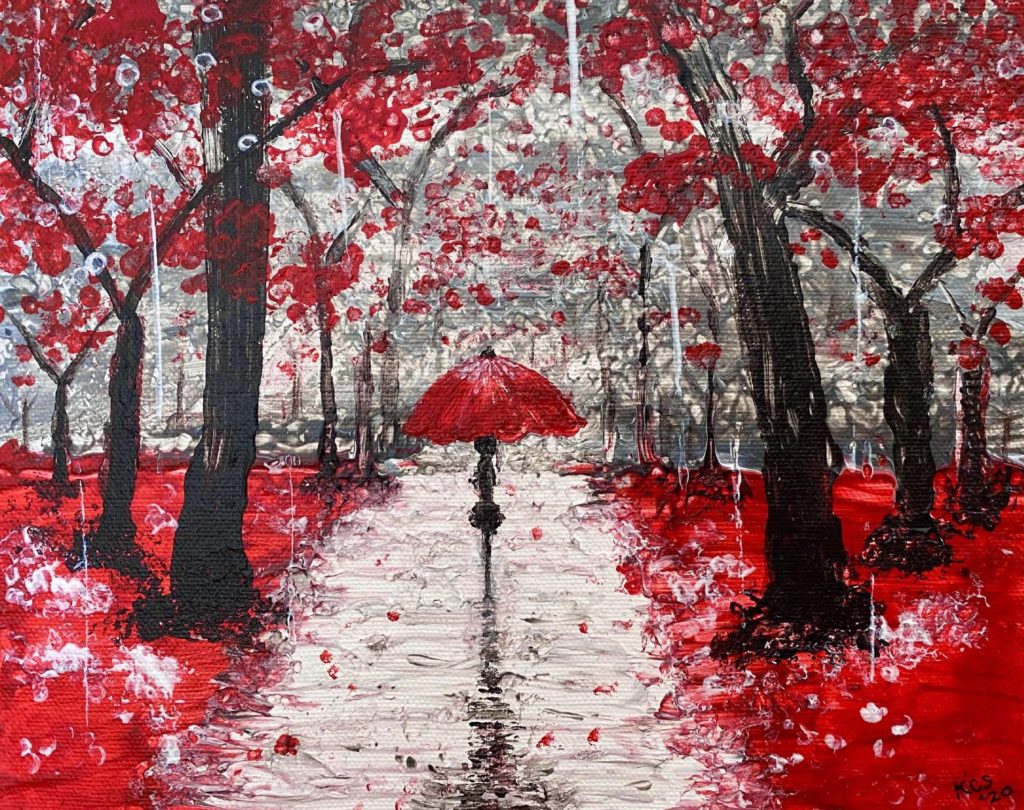
Desert Flight and Ruby Rain
By Kelly Sargent
Posted on
an independent creative arts journal
By Kelly Sargent
Posted on
By Mary Lou Wilshaw-Watts
Posted on
When he was born, his mother cried for two days, and his father got desperately drunk. His grandmother—who wore many shawls, had seen many things, and whose passions time had ground to dust—regarded the newborn’s odd bony protuberance with nonchalance. If God had put a knob on her new grandson’s back, he must have done so for a reason.
For those two days, the grandmother sat close to the fire—for her shawls were thin—stirring the embers and rocking the baby. On the third day, she slapped and punched her drunken son until he wept—not an easy task since in his state he felt little physical pain—and plied her daughter-in-law with brandy until she was drunk—not a difficult task since all that crying had left her dehydrated and thirsty. … ...continue reading
By Jeffrey G. Wang
Posted on
I know nothing but the spray
of buckwheat, highway
perfume which permeates tar
oases we cross each day.
Our tired shoes trace contrails
of an F-150 that has already
blitzed through eternal savannah.
I know nothing but adobe homes
and SNAP. Bricks
laid in a pattern I can’t quite discern,
etched into mountains
like long-forgotten cuneiform,
waiting for some denim-clad
explorer to bring its Rosetta Stone.
Until then, we settle, ephemeral
& unpronounceable,
waiting upon this assembly
of fissure and dust for a voice
evicted—its stolen breath now
only a road apparition:
Tilework Americana.
A blink of neon lights the path
from Mississippi deltas
to concrete jungles, from checkered
walls of late-night diners
to the daytime glow of Sunday papers,
headlines flickering into
a lithographic coma as we turn
to our pharmaceutical dreams.… ...continue reading
By Zabette Gérard
Posted on
Jesus, I’m ranking murders now?
“At least he didn’t kill his kid”?
Miamians have a perverse, reverse pride, I get that. We think our newscast is more ‘interesting’ than other places. We’re the world’s rudest city, the worst drivers, the epicenter of Medicare fraud. When some study reported that, combining all the social indices – housing, crime, attitude, whatever – Miami is the number-one lousiest place to live in the U.S., many of us thought, “We won!”
But did I really just now think that this murder isn’t as bad as the one two days ago, because this time no machete was involved, because this time he killed the mother but spared the child?
I must leave Miami before my son is much older. But noticing how randomly delightful this place is can mess up an exit strategy.… ...continue reading
By John Van Dreal
Posted on
These are the words he used to describe his discomfort: “I’m better when I sit there.” He pointed to a set of chairs, backed up to the pub’s exterior wall.
His attentive companion tipped her head to the side, narrowing her eyes and nodding, stepped forward.
They sat, her expression suggesting uncertainty.
But I knew.
I knew the moment I noticed him approach the sidewalk seating and sensed that he had noticed me first, and everyone else in the immediate location, assessing us within the casual, situational elements of walls, windows, furniture, dress, drunkenness, gesture, and relaxation.
I knew when I noted the ink, resting on skin pulled tight over well-defined muscle, peering out from under his left short sleeve . . . the lower third of the gray-green letters composing the words Leave No Man Behind.… ...continue reading
By Phoebe Yeoh
Posted on
Molly’s paper dress crackles. The stiff, waxy material creates white looming cliffs and shadowed valleys, and she explores them with her fingers, reading the anatomy charts on the wall. The Muscular System. Personal Hygiene. Silky streams of cold air snake around her arms.
“Molly! How’re you doing?”
Molly jerks her back straight, glasses falling down her nose. She turns the corners of her mouth up, giving the doctor her polite, one-word answer.
The doctor shakes her hand and settles into her round of questions. Yes, she eats regularly. No, she hasn’t felt any odd pains. No, she hasn’t started her period. She hopes she never has to. Her head starts hurting; the office is so cold.
A flashlight shines into her eyes, nose and throat; a hammer taps her knee. … ...continue reading
By Allison Wall
Posted on

Spinning to Mars by Meg Pokrass (Blue Light Press, June 2021) is an introspective collection of linked micro-fiction. For those who might be unfamiliar with this form, micro-fiction is an even more abbreviated style of storytelling than flash fiction, though micro still technically falls under flash’s umbrella. Pokrass is an award-winning expert of the genre, and reading this collection highlights the form’s charms, strengths, and possibilities.
The inciting incident of the book as a whole is the loss of the protagonist’s father when she is five years old. The feeling of his absence permeates the sequence. It is as though he is on another planet, unreachable and alien. The fatherless protagonist grows up spinning (sometimes sure of what she wants, other times disoriented and confused).… ...continue reading