One of the strengths of fiction is its ability to allow readers to live as another person. We not only move with characters through their time and space, but we also sense and feel with them. We learn more about what it means to be human—widening our experience of living—by reading novels. We practice the skill of empathy.
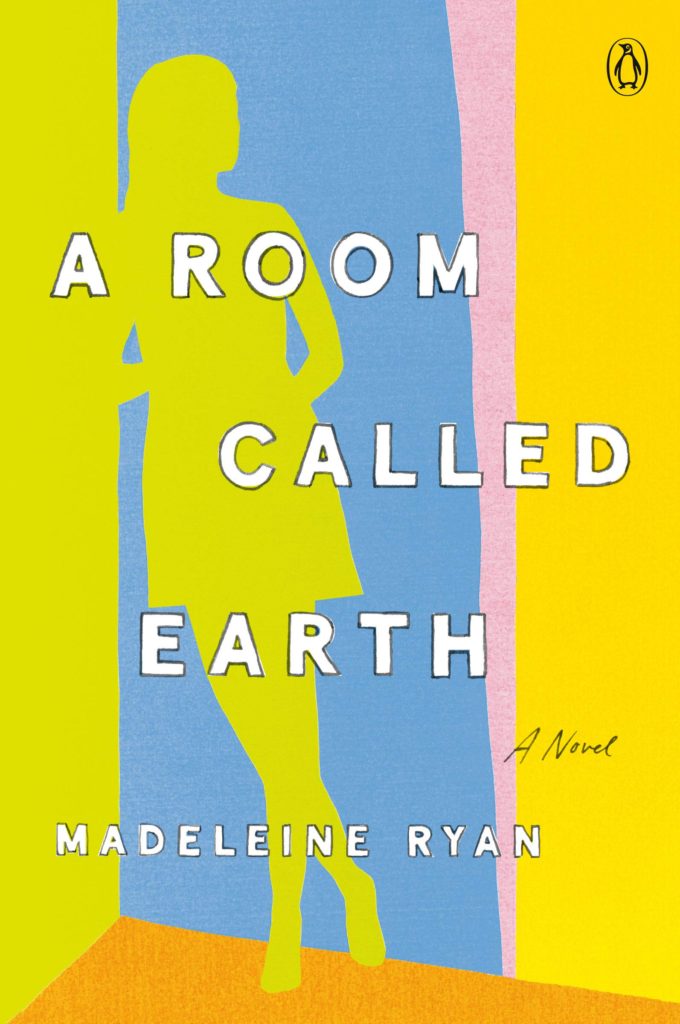
Australian writer Madeleine Ryan’s debut novel, A Room Called Earth (Penguin Books, 2020), offers a delightful and unique character for her readers, one that shocked me not by her strangeness, but by the extreme degree of relation and familiarity I felt for her.
A Room Called Earth follows an unnamed autistic woman getting ready for and attending a party. The events of the book take place in twenty-four hours or less, but the richness of the unnamed protagonist’s stream of consciousness taps infinity.…
The breeze felt nice on her skin: cool, crisp, a subtle autumn breeze. Maggie often came to this spot, this high rocky cliff overlooking the inlet, where she could watch the planes that came into land at the airport behind her. The air always smelled salty, with a hint of muddy silt, and the sound of the waves on the rocky beach below was soothing.
Every ten or so minutes, she would see the glint of a small plane as it approached on the horizon. It would get bigger and bigger the closer it got, until it roared over top over her and touched down on the runway to the north. Sometimes, they flew very low, and it seemed as though she could reach her hands up and touch the belly of the plane.…
I philosophize too much, even when washing my hands, contemplating, like Saint Francis does a skull, the healing and cleansing properties of soap, reducing my reflection to its bare essentials until distilled to only the elements of soap, potassium fatty acid salts, and I’m back to chemical properties— No mind-body problem there.
Should’ve been a priest (at least the wine is free), but I’m not, because people I love say religion is more lethal than heroin. Accept nonacceptance, they say. Except for acceptance? I ask.…
Last night I attended a lecture/performance by composer and trumpeter, Hannibal Lokumbe, at Parker Institute in Uptown New Orleans. When I’d read in the paper that fifteen years ago he walked off a job during intermission at a club in New York where people paid $100 to hear him, and then wandered the streets, crying and “asking the Creator to find a way that [he] could be more effective with the gift that [he] was given,” I knew I had to be in his presence. As a visual artist and writer, I have that same prayer. So, despite the fact that my entertainment budget is virtually zero, I went, believing the evening held promise for healing. That proved to be true.…
Shingles peel from the roof— just corners at first, then all at once, like sodden bandages. Nothing heals anything …………….forever, …………….or completely. These storms, they take their toll,
walls of gray blooming over breakwaters— last light leaking over top, casting yellow on the cove, just beginning to swell.
A thick branch falls to half-frozen dirt— new wood showing pale at the cracks— and rolls to the water. These storms will wear it smooth, toss it back to a beach later, made special for a mantle in a city or some landlocked state very far from here.…
Desmond pulled the fabric close over his nose. The sunlight streamed in through the window, lighting the tiny dust particles that floated around him, making the sterile living room seem like an enchanted garden. Holding the fabric tight, he reached out and touched the glass window pane with his extended index finger. It felt smooth, cool. When two women walked into his view, he gasped, ducking quickly below the windowsill.
“Desmond!” his mother called from somewhere behind him. Sullenly, Desmond pulled at the fabric of the curtains until the window was completely covered. The living room lost its magic.
“Desmond, you silly boy,” mother said, approaching him. “Peeking out at our neighbors again?” Desmond hung his head.
“No, mama,” he whispered bashfully, a smile tugging at his lips.…
Just twenty-seven years old, a small-town Midwesterner, I spend the morning teaching English conversation at a language school near Gangnam. The 6 AM class bristles with businessmen, bosses with white hair, suits, and a lingering smell of cigarettes. Rows of brown eyes glare. They regard me defiantly, Confucian notions of age and hierarchy clashing with low-intermediate language skills and a deep need to save face. Each of them has paid good money to practice English, has arisen from bed at least an hour early for it, yet no one will open his mouth.
The 7 AM class is the same.
In the 11 AM class, though, the atmosphere shifts entirely. Brown eyes smile, invite. The students here are rich housewives and retirees, a cohort that’s been together in this class for months or even years, and it feels like a social club.…