I’ve never actually listened to Pink Floyd’s The Dark Side of the Moon. Nevertheless, the 1973 album made a lasting impression on me starting in the mid-90s. That’s when “MTV News” host Kurt Loder reported the music’s surprising synchronicity with the 1939 film The Wizard of Oz.
We were still on dial-up at this point. No one downloaded (much less streamed) albums and movies. With neither the music nor the film available to me, I simply marveled at the notion that two works—separated by decades—could be brought together by the happy, accidental discovery of a (probably stoned) fan.
Even now, with the internet at my fingertips, I have yet to test the Pink Floyd/Wizard of Oz theory. I worry the reality will never match my childhood reverie.…
A curtain shifts slightly to the right and a woman, freshly bathed, blond hair coiffed, a cigarette in her slim hand, watches a dark man walk slowly as if he has all the time in the world. He peers carefully into the garage of another residence, six houses away down the street. He looks at a couple of recently acquired antique cars that reek of paint. After he studies them for a long time, he gazes at the Mercedes parked on the next driveway. He continues walking and pauses to glance at a three-car garage, a new addition to what used to be a Colonial, but is now an elegant pillared residence. The raised garage door reveals a Saab and junk: wires and cables and boxes. …
You’re wanting to know about the crucified squirrel. But first, here’s what happened to my Christmas lights.
I lived in Iowa City, in a second-floor walk-up over Iowa Ave. Without any warning, November was here. Late fall in the Midwest is like if the planet Venus ends up shoved to the back of the fridge with the celery and other things nobody wants until it gets soft and bruised, and then what do you do? You don’t want it. You can’t throw it away. The interminable winter had not yet arrived, but already people walked the streets with a look of surrender. The sun would sort of give up and sink around noon. Then, for hours, it would rain flecks of ice. I decided to take things into my own hands.…
One of the strengths of fiction is its ability to allow readers to live as another person. We not only move with characters through their time and space, but we also sense and feel with them. We learn more about what it means to be human—widening our experience of living—by reading novels. We practice the skill of empathy.
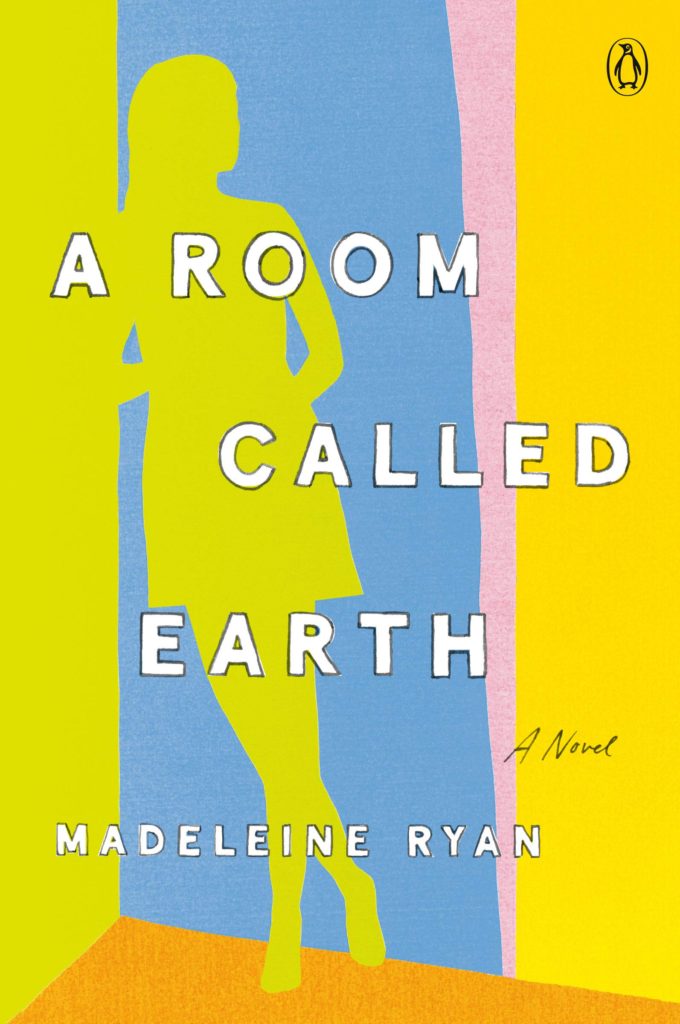
Australian writer Madeleine Ryan’s debut novel, A Room Called Earth (Penguin Books, 2020), offers a delightful and unique character for her readers, one that shocked me not by her strangeness, but by the extreme degree of relation and familiarity I felt for her.
A Room Called Earth follows an unnamed autistic woman getting ready for and attending a party. The events of the book take place in twenty-four hours or less, but the richness of the unnamed protagonist’s stream of consciousness taps infinity.…
The breeze felt nice on her skin: cool, crisp, a subtle autumn breeze. Maggie often came to this spot, this high rocky cliff overlooking the inlet, where she could watch the planes that came into land at the airport behind her. The air always smelled salty, with a hint of muddy silt, and the sound of the waves on the rocky beach below was soothing.
Every ten or so minutes, she would see the glint of a small plane as it approached on the horizon. It would get bigger and bigger the closer it got, until it roared over top over her and touched down on the runway to the north. Sometimes, they flew very low, and it seemed as though she could reach her hands up and touch the belly of the plane.…
I philosophize too much, even when washing my hands, contemplating, like Saint Francis does a skull, the healing and cleansing properties of soap, reducing my reflection to its bare essentials until distilled to only the elements of soap, potassium fatty acid salts, and I’m back to chemical properties— No mind-body problem there.
Should’ve been a priest (at least the wine is free), but I’m not, because people I love say religion is more lethal than heroin. Accept nonacceptance, they say. Except for acceptance? I ask.…